How Accurate Is HowLongToBeat When You Play 5 Hours a Week?

HowLongToBeat is accurate at what it measures: reported active play. Here’s why that feels short at five hours a week, and which figure to read instead.
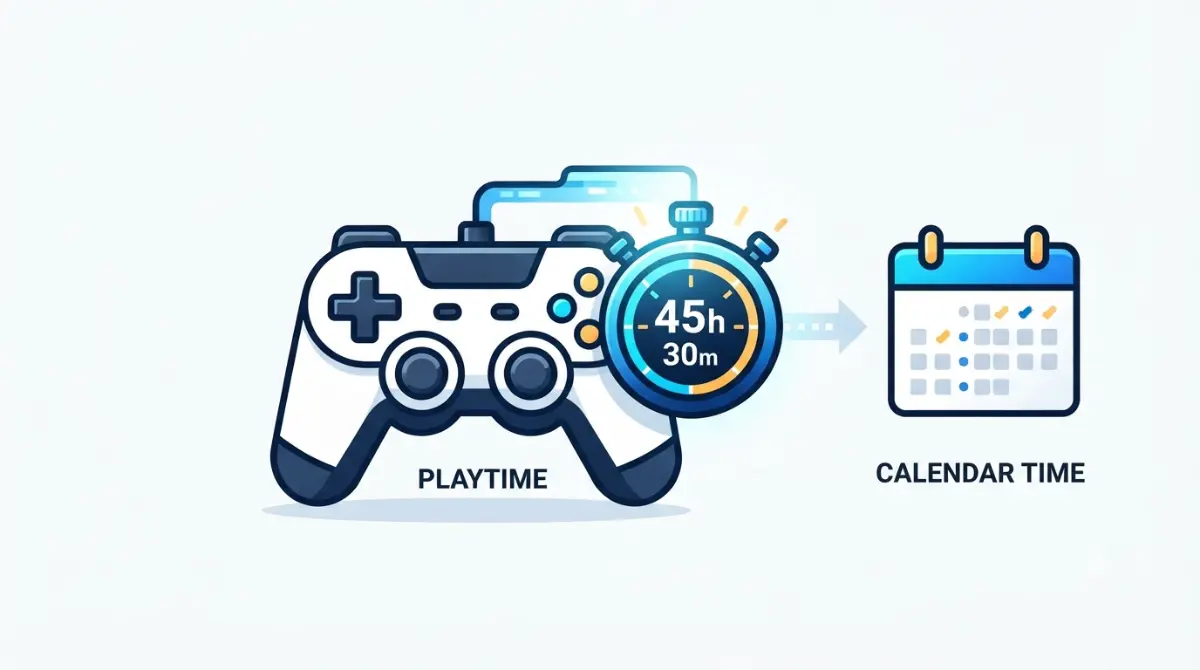
Table of Contents
You checked the number, started the game, and it took far longer.
⚖️ The Verdict: Mostly, yes. HowLongToBeat is an honest community average of how long players say they actively played. It feels short because that isn’t how long a game takes you at five hours a week, with breaks and your own pace. Read the Leisure or median figure, check the submission count, and turn hours into evenings.
What the number really measures
It measures reported time with a controller in hand. It doesn’t measure weeks on the calendar.
What to use instead
- About five hours a week? Jump to the evenings conversion below.
- You explore every corner? Use Leisure, not the headline.
- Felt slow finishing a “short” game? You probably weren’t. The same logic sits behind our short games sorted by how many evenings they take.
What a HowLongToBeat number measures, and what it doesn’t
Every figure on the site comes from players, not publishers.
Main Story, Main + Extra, Completionist
Players submit their own playtime after finishing or abandoning a game, then file it under a category. A number is only as careful as the people who logged it.
Average, median, Rushed, Leisure
Each game’s detail page shows how many submissions it has. It also shows the average, the median, and separate figures for faster (Rushed) and slower (Leisure) players. Most people only read the big headline number.
For context, HowLongToBeat sits within IGN Entertainment, the Ziff Davis division that also runs IGN and Humble Bundle.
Why your playthrough runs longer than the listed time
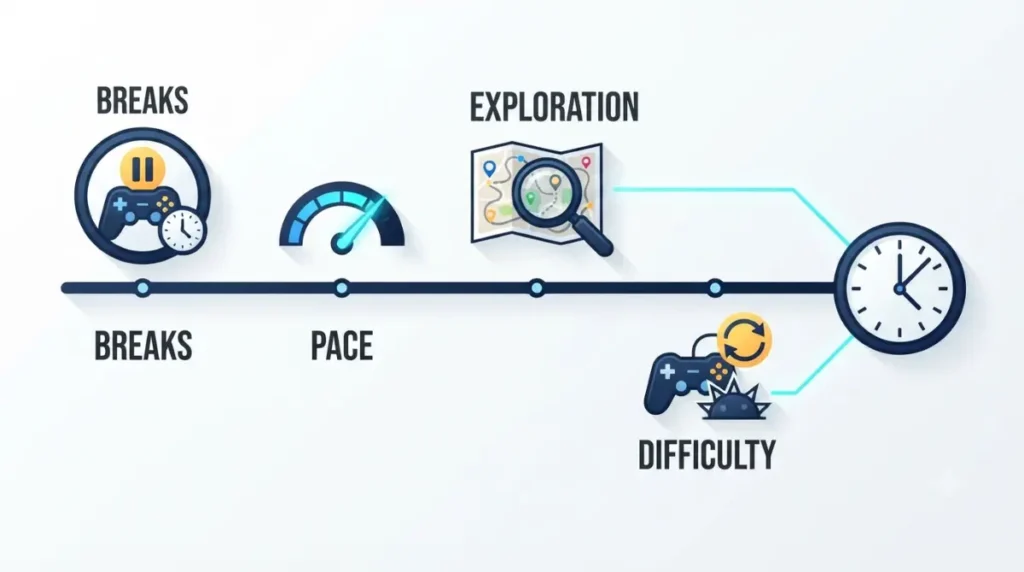
Four common reasons:
- Calendar time isn’t active time.
- Pace, exploration and difficulty vary.
- Submitters are a self-selected group.
- Some samples are thin.
Active time isn’t calendar time
Returning after days away means relearning controls and remembering where you were headed. Broken-up sessions cost more than one long one.
Pace, exploration and difficulty
Reading every note or retrying a hard stretch adds up, and none of it shows in someone else’s run.
Who tends to submit times
People motivated to log playtime may lean towards efficient finishes. That’s likely, not proven.
💡 Worth Knowing: Forum users have noticed this for years. One ResetEra user reported running about 15% over average, and others pointed to the Leisure figure. That’s anecdote, not data.
What an 8-hour game means at 5 hours a week
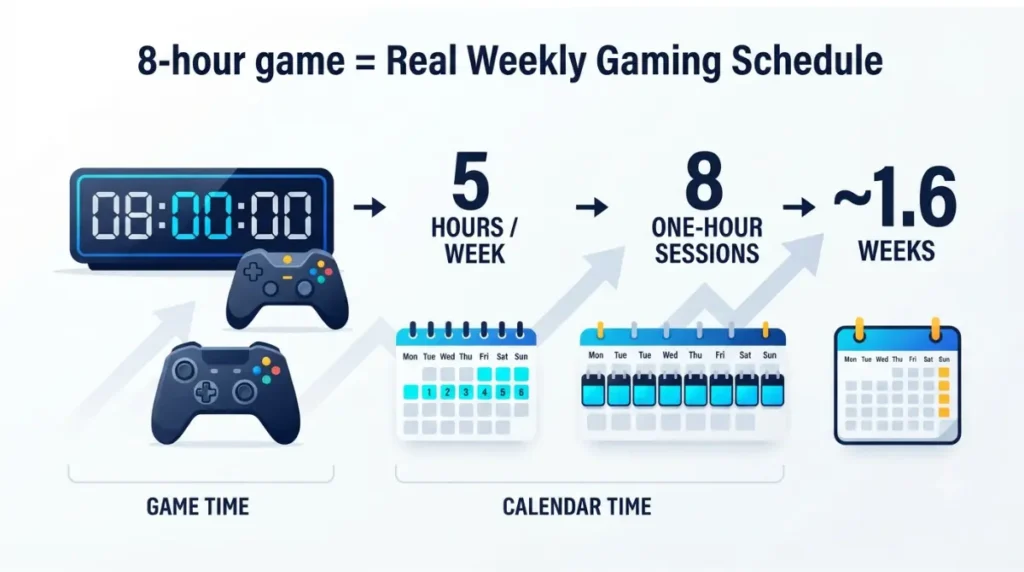
Hours only help once you convert them into your actual week.
Hours to evenings
⏱️ Time Check: Worked example, not a real game. A game listed at 8 hours for the main story, played at five hours a week in one-hour sittings, is eight evenings. That’s just over a week and a half, assuming every minute counts.
Tight weekly budgets are normal. The ESA’s 2025 Essential Facts report found 60% of US adults play weekly, and the average player is 36.
Add your own buffer
We won’t invent a percentage. Compare your last two finished games against their listed Main Story time; the gap is your buffer.
Then work out your own finish date, or pick from games you can finish in a single evening and games that fit one weekend.
How to read HowLongToBeat so it fits your week
A few minutes on the detail page makes the number far more useful.
Use Leisure or median, not the headline
A handful of extreme submissions can drag an average away from typical play. The median resists that. Leisure reflects slower players.
Check the submission count
Popular games with many submissions give firmer estimates. Small indies, older games, new releases and heavily updated games can rest on far fewer.
Pick the right category
Main Story only if you really skip side content. Most thorough players belong in Main + Extra.
✅ Do This: Before starting anything tonight, open the detail page, note the Leisure figure and the submission count, then divide by your weekly hours.
HowLongToBeat vs Steam playtime vs your own clock
Each counter measures something different.
What Steam counts
Steam’s counter is widely reported by users to track how long the game is running. That includes time sitting minimised or paused at a menu.
Why your own log beats both
A simple note of start and stop times, session by session, gives you the one number that fits your life. After two or three games, you’ll know your personal gap.
When a HowLongToBeat number deserves less trust
Some figures deserve a second look before you plan around them.
Thin data
Few submissions means a few players’ habits shape the whole number.
Games that never really end
Roguelikes and endless games have no fixed finish, so any figure mostly reflects when submitters chose to stop.
Games still changing
Early-access and live-service games grow after launch, so older submissions may describe a smaller game.
⚠️ Watch Out: A confident-looking figure on a brand-new release can rest on a small handful of runs. Check the count before you plan a weekend around it.
Questions about HowLongToBeat accuracy
1. Is HowLongToBeat accurate?
Mostly. HowLongToBeat is an honest community average of reported play, but it ignores your pace and your week.
2. Where does HowLongToBeat get its times?
From players, who submit HowLongToBeat playtime after finishing or abandoning a game, filed under a category.
3. What does Leisure mean on HowLongToBeat?
Leisure is HowLongToBeat’s figure for slower players, closer if you explore thoroughly or play in short sessions.
4. Should I use the HowLongToBeat median or average?
Use the median. A few extreme HowLongToBeat submissions can drag the average away from typical play.
5. Why do games take me longer than HowLongToBeat says?
Breaks, exploration, difficulty and who submits all push your time above the listed HowLongToBeat figure.
6. Does HowLongToBeat include idle time?
HowLongToBeat relies on what players report, so each figure is only as careful as its submitters.
7. Is Steam playtime more accurate than HowLongToBeat?
Not for planning. Steam is widely reported to count unattended running time; HowLongToBeat reflects reported play.
8. Are HowLongToBeat times reliable for roguelikes?
Less so. Roguelikes have no fixed end, so HowLongToBeat mostly shows when submitters chose to stop.
9. How do I estimate when I’ll finish using HowLongToBeat?
Divide the HowLongToBeat Leisure or median figure by your weekly hours, then add your personal gap.
10. Is HowLongToBeat owned by IGN?
Yes. HowLongToBeat sits within IGN Entertainment, the Ziff Davis division that also runs IGN and Humble Bundle.
The bottom line on HowLongToBeat accuracy
HowLongToBeat is accurate at what it measures, and it measures less than you’d think. Treat it as a starting point: use the Leisure or median figure, check the count, and divide by your real weekly hours. Then add the gap only your own log can show.